- Contact Us Now: (415) 968-1780 Tap Here To Call Us


Form 1099-DA: What Crypto Investors Need to Know for 2026


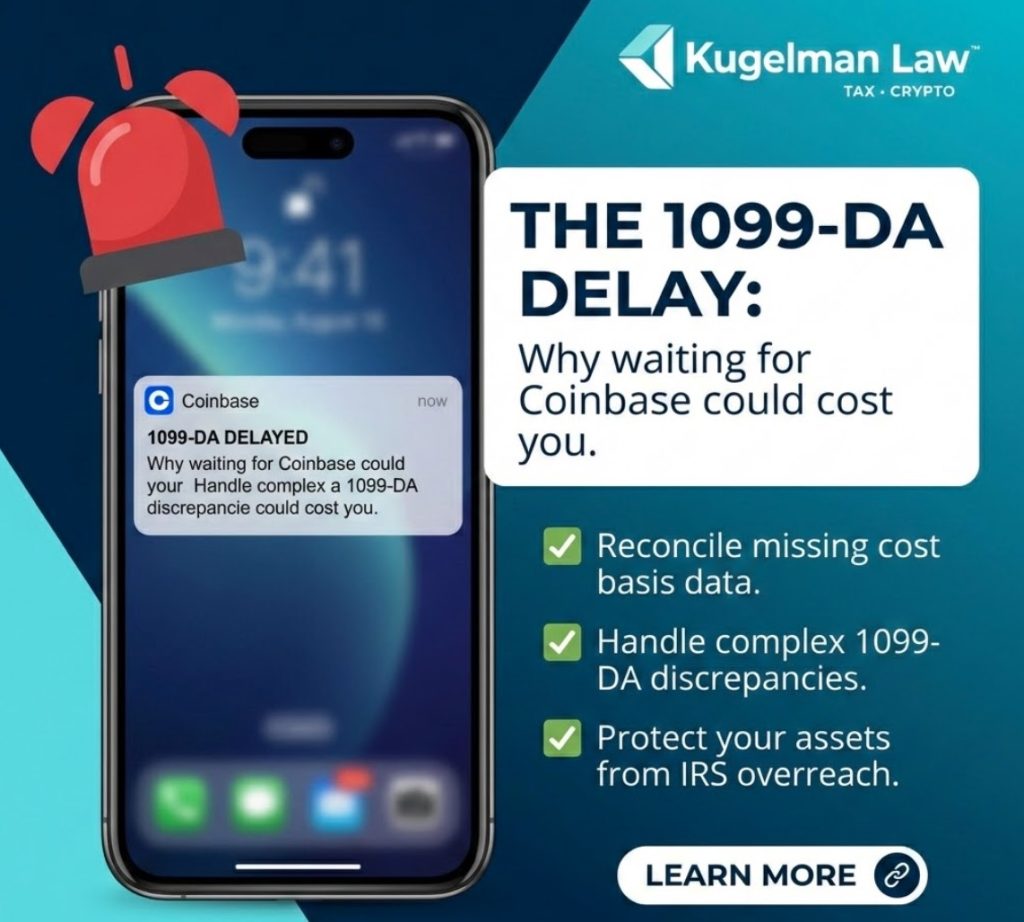
The 2025 tax year (filing in 2026) marks a massive shift for cryptocurrency investors and digital asset holders. With the official introduction of Form 1099-DA (“Digital Asset Proceeds from Broker Transactions”), the IRS now has a direct line of sight into your digital asset activity.
However, as the first filing season under these new rules begins, a major hurdle has emerged: widespread reporting delays.
The 1099-DA Reporting Crisis: Coinbase and Kraken Delays
Major exchanges, including Coinbase and Kraken, have reported significant delays in issuing the new 1099-DA forms. Some taxpayers have been notified that their forms may not be available until March 18th or later.
For high-volume traders and businesses, this leaves an incredibly narrow window to reconcile complex transaction histories before the April 15th deadline.
At Kugelman Law, we are already hearing from concerned clients about these delays. Filing an extension may be necessary, but simply waiting for the form is not enough. You must understand what is being reported – and more importantly, what is missing.
What Does Form 1099-DA Mean for Your Taxes?
The 1099-DA is designed to track gross proceeds from sales and exchanges of crypto, NFTs, and stablecoins. While the IRS intended this form to simplify tax compliance, the first year of implementation carries significant risks for the unprepared taxpayer:
- The Basis Gap: Brokers are generally not required to report cost basis for assets acquired before 2025. If you transferred Bitcoin from a hardware wallet to an exchange and sold it, the exchange may report a $0 cost basis to the IRS.
- The Reconciliation Trap: The IRS receives a copy of every 1099-DA issued to you. If your tax return does not perfectly match the “Gross Proceeds” reported on these forms, it triggers an automated red flag, potentially leading to a CP2000 notice or a full IRS audit.
- Inaccurate Accounting: Relying solely on exchange-generated forms without independent reconciliation often results in overpaying taxes on the full sale price rather than just the capital gain.
Navigating the 1099-DA Pitfalls: Expert Crypto Accounting
Because Form 1099-DA is in its first year of use, errors are expected. Taxpayers must be proactive in cost basis reconciliation. If you have moved assets between multiple exchanges (Coinbase, Binance, Gemini) or utilized self-custody wallets, the 1099-DA you receive will likely be incomplete.
As an authoritative crypto tax law firm, Kugelman Law provides the forensic crypto accounting necessary to bridge these gaps. We ensure that your reported gains are accurate, defending you against IRS overreach caused by automated reporting discrepancies.
Why Crypto Investors Choose Kugelman Law
Our team understands the unique needs of high-net-worth crypto investors and tech-forward businesses. Our dual expertise in tax law and cryptocurrency accounting allows us to offer a comprehensive defense strategy that a standard CPA firm cannot provide.
Our services include:
- Forensic Crypto Accounting: Reconstructing transaction histories to establish accurate cost basis.
- 1099-DA Discrepancy Resolution: Correcting broker errors before they lead to IRS audits.
- Audit Defense & Tax Resolution: Representing you in front of the IRS if your digital asset reporting is questioned.
Don’t Let a Delayed 1099-DA Trigger an IRS Audit
If you are facing delays with your Coinbase or Kraken 1099-DA, or if you are concerned about correctly reporting your crypto gains for 2025, contact the experts at Kugelman Law today. We provide the professional, authoritative guidance needed to navigate the evolving digital asset tax landscape.